Why would two people spend a combined $180,000 restoring a hundred year old house in De Tonti Square and end up with the exact same state tax credit as a neighbor who spent nothing at all? The answer isn't a paperwork mistake. It's the rule itself. If either of those two people plans to live in the house, the credit isn't available to them at all.
That single fact changes how a buyer should think about every listing in Mobile's seven historic districts. Ashland Place, Church Street East, De Tonti Square, Leinkauf, Lower Dauphin, Oakleigh Garden, and Old Dauphin Way all sit under the same set of rules, and most of what gets repeated about buying in them is either outdated or only half true.
The checkbox that changes the math
Alabama's Historic Rehabilitation Tax Credit refunds 25 percent of qualified rehab costs on a certified historic structure, and for years that included owner-occupied homes. A lot of the advice still circulating online reflects that older version of the program.
It isn't the current version. The application the Alabama Historical Commission now requires includes a line called Disqualifying Use, and to qualify, the owner has to certify that the property is not occupied by the owner and is not used exclusively as a primary or secondary residence. In plain terms: if you're buying the house to live in, you check the box that disqualifies you.
That change took effect after December 31, 2022, and it flips who the credit actually serves. A buyer who restores a Church Street East townhouse and rents it out, or converts it into office space, can still apply. A family that buys the same house next door and moves in cannot. The 60 year age requirement, the National Register eligibility, and the rule that project costs must exceed 50 percent of the purchase price or $25,000, whichever is greater, all still apply. None of that matters if the disqualifying box gets checked.
What the ad valorem line actually says
The second assumption buyers carry into these neighborhoods is that historic designation itself lowers the property tax bill. It doesn't, at least not for someone living in the house.
Alabama already assesses owner-occupied homes at the lowest ad valorem rate available under Class III, regardless of whether the house sits inside a historic district or not. The state's own guidance on the program says as much directly: the ad valorem benefit tied to historic status exists for income-producing property, because owner-occupied homes are already getting that rate. A hundred year old Greek Revival on a quiet Oakleigh Garden street and a five year old house in a new subdivision pay the same base rate if both are owner-occupied primary residences. The historic plaque on the porch doesn't change that number.
The rehab credit rewards someone who won't live there. The ad valorem rate treats a resident the same whether the house is old or new. Neither incentive is built around the person buying to move in.
Seven districts, one board
Understanding which district you're looking at matters less for the tax picture, since all seven fall under identical state and local rules, and more for what you'll actually be maintaining. Mobile's locally designated historic districts are:
- Oakleigh Garden, home to the Oakleigh House museum and Washington Square, with Callaghan's Irish Social Club anchoring the neighborhood's dining strip
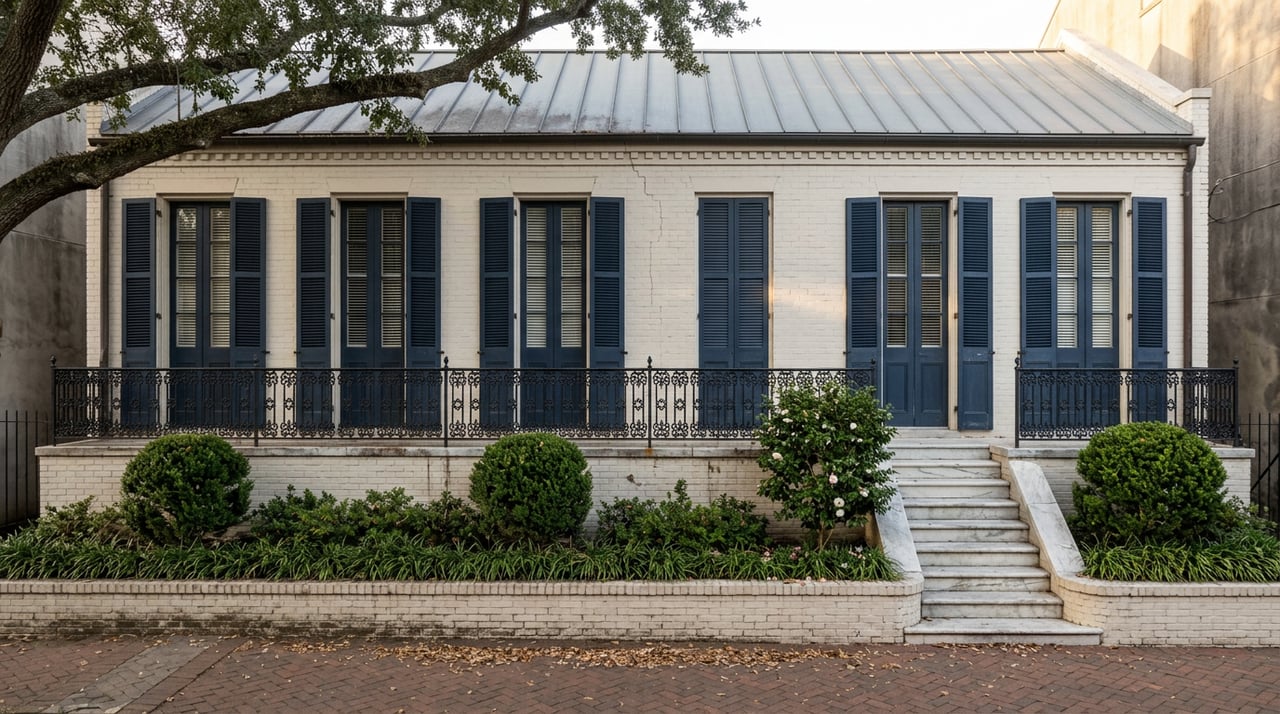
- De Tonti Square, nine blocks of 1840s to 1860s townhouses near De Tonti Square Park, home to Iron Hand Brewing, Mobile's oldest brewery
- Church Street East, built around the Cathedral of the Immaculate Conception, Barton Academy, and the Ketchum Mansion
- Old Dauphin Way
- Ashland Place
- Leinkauf
- Lower Dauphin
Every one of these sits within the boundary that Mobile's Architectural Review Board oversees, which matters more to a buyer's actual budget than either tax program does.
The paperwork that shows up after closing
Here's the friction that doesn't appear on a listing sheet. Any exterior work in one of these seven districts, windows, additions, fences, decks, paving, needs a Certificate of Appropriateness before a contractor can start. The Architectural Review Board is an eleven member volunteer body that reviews those applications, and it exists specifically to keep exterior changes consistent with each district's historic character.
That process adds a review step most buyers coming from newer subdivisions have never dealt with. It's not a fee that shows up in a closing disclosure. It's a timeline cost: a board meeting schedule to work around, a design that has to match guidelines rather than just a contractor's standard spec sheet. A buyer weighing a historic district house against a comparable one outside the boundary should treat that review process as part of the real cost of ownership, not an afterthought once the sale closes.
What this means for pricing
Listing data for homes tagged inside Mobile's historic districts shows a median list price around $240,000, based on a snapshot of 20 active listings in late August 2026. That number sits close to the broader city figures for the same window: citywide active listings carried a median list price of $269,000 in August 2026, while closed sales over the three months ending June 2026 settled at a median of $230,000. Typical time on market citywide has run somewhere between 73 and 76 days depending on the source and month, a range that applies across Mobile generally rather than something specific to the seven historic districts.
What that means for a historic district buyer specifically: the houses aren't carrying a large premium or discount relative to the rest of the city on price alone. The real cost difference shows up later, in whether the buyer plans to live there and loses access to the rehab credit, or plans to rent or convert the property and can actually use it.
Before assuming the credit applies to a specific house, a buyer needs three things to line up:
- Occupancy plan. The property can't be a primary or secondary residence for the applicant.
- Spending threshold. Project costs need to exceed 50 percent of the purchase price, excluding land value, or $25,000, whichever is higher.
- Timing. The application goes to the Alabama Historical Commission before work starts, not after.
Miss any one of the three and the 25 percent refund isn't on the table, no matter how historic the house is.
Frequently asked questions
Does buying in a historic district still lower my property taxes if I live there? No more than buying anywhere else in Alabama. Owner-occupied homes already get the state's lowest Class III ad valorem rate, historic designation or not.
Is there any tax credit left for someone who wants to live in the house? The state's 25 percent rehab credit isn't available for a primary or secondary residence under the current rules. Some owners explore the federal Historic Preservation Tax Incentive, though that program also requires the property to be income-producing after rehab, not owner-occupied.
What if I only rent out part of the house? That's a conversation for a tax professional and the Alabama Historical Commission directly, since eligibility depends on how the property is used and certified, not just partial use. This isn't tax advice, and anyone considering a mixed-use rehab should confirm current eligibility with the Commission before assuming either outcome.
If you're weighing a house in one of Mobile's historic districts against something newer, the numbers above are the ones that actually move a budget, not the ones that show up in older blog posts about tax perks. Jessica Nguyen works with buyers across Mobile's historic and non-historic neighborhoods and can walk through what a specific address in Oakleigh Garden, De Tonti Square, or any of the other five districts means for your plans before you write an offer. Schedule a free consultation to talk through the details on a house you're considering.