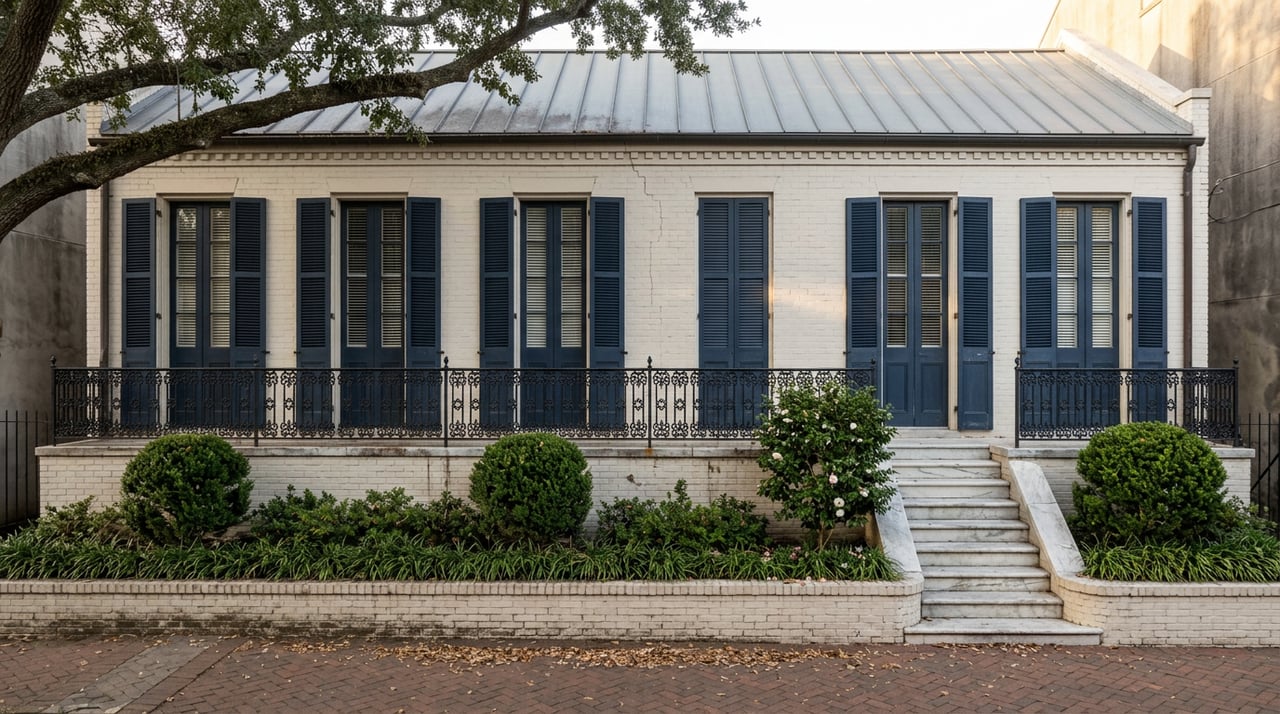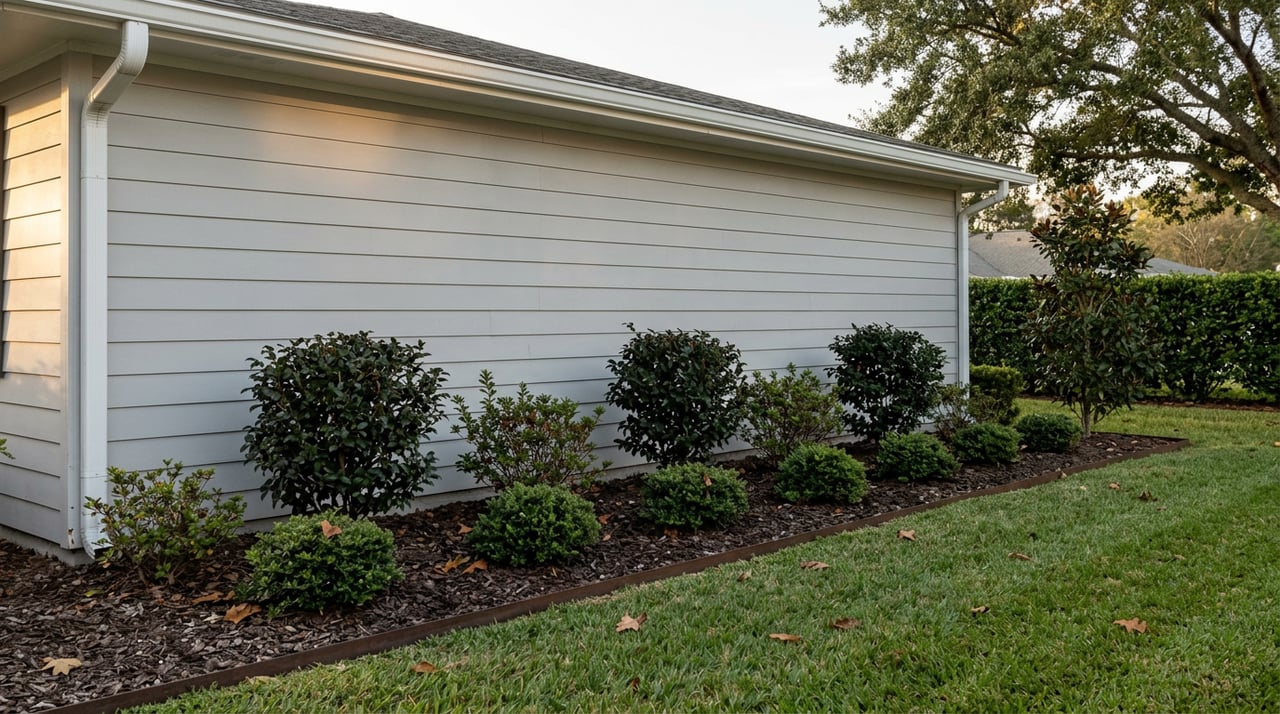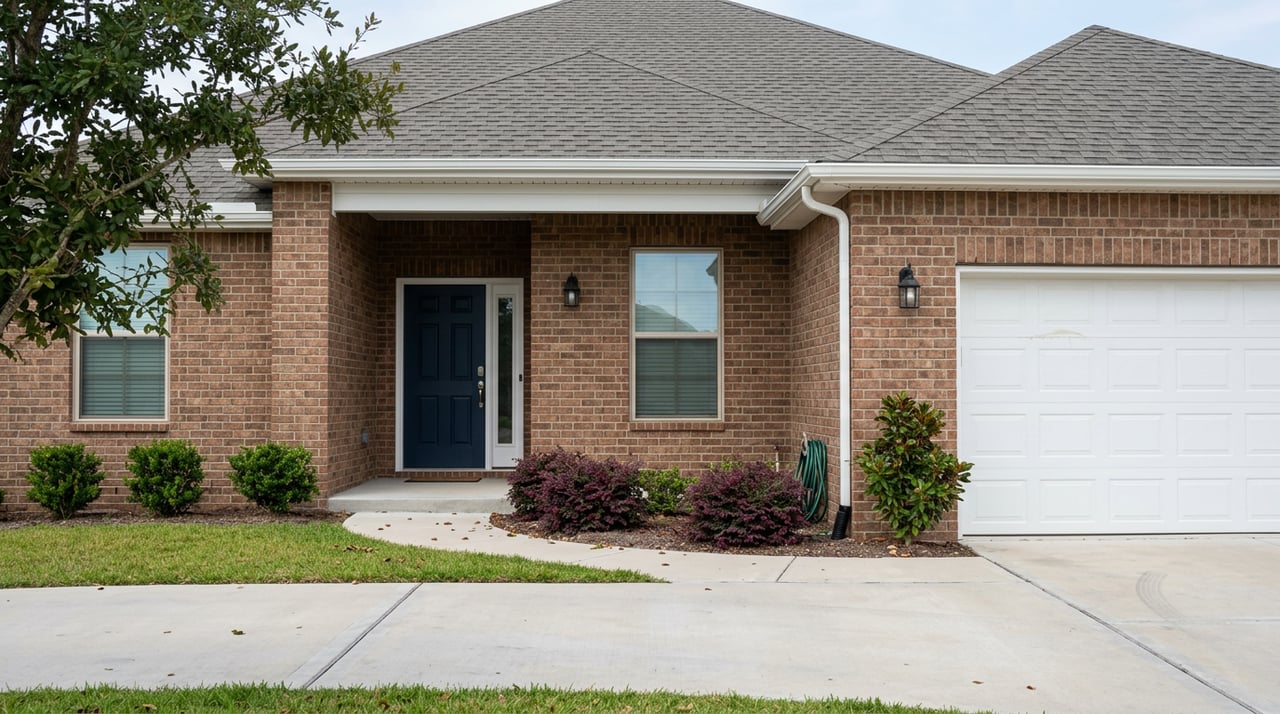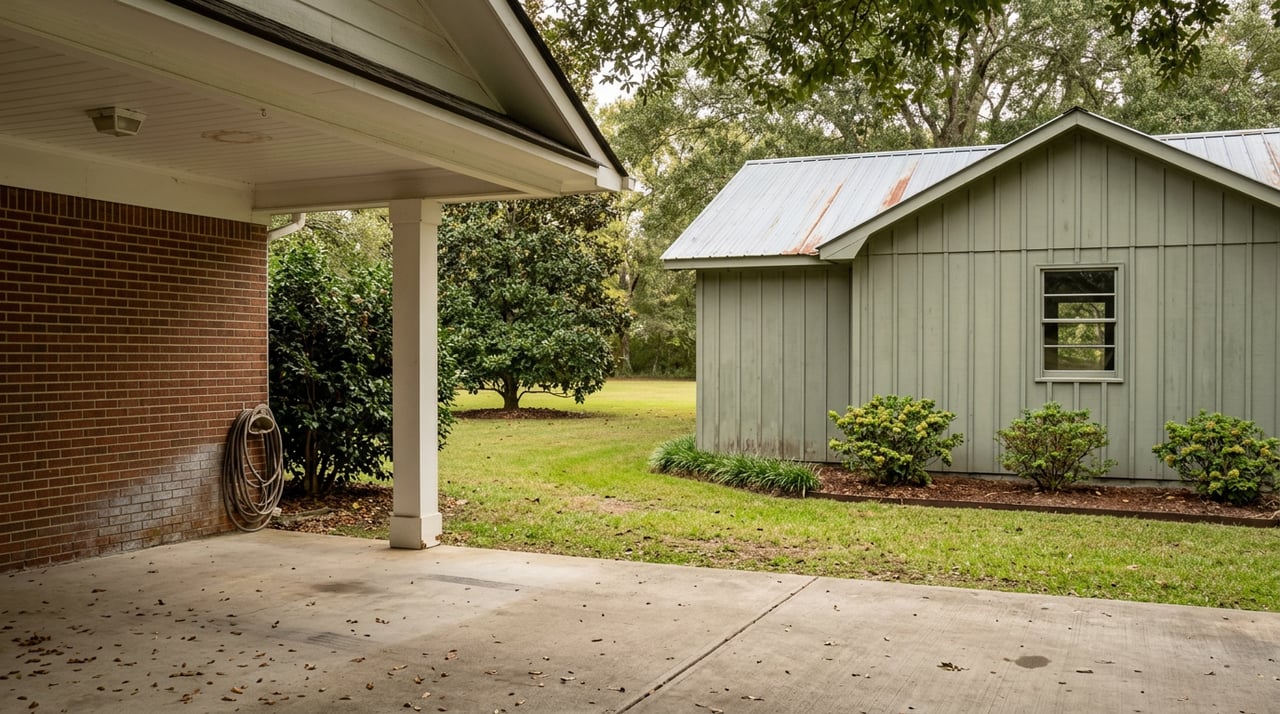
A ranch home on Matlock Road came on the market in Irvington not long ago: built in 2024, sitting on 1.23 acres, no HOA, three bedrooms, three and a half baths, a bonus room upstairs that could work as a fourth. The listing carried a badge a lot of Irvington listings carry these days: USDA-eligible area, zero down for qualified buyers.
That badge tells you one true thing about that parcel. It tells you nothing about whether it applies to you.
USDA's Section 502 Guaranteed Loan finances 100% of a home's appraised value with no down payment, which is why the badge shows up so often on Irvington listings. But eligibility isn't one test. It's two, and they don't measure the same thing. One test is about the dirt: does this specific address sit inside a USDA-designated rural boundary. The other is about the household: does your income sit under a ceiling that has nothing to do with the price of the house you're buying. A listing can pass the first test and say so proudly. Only your lender can tell you whether you pass the second, and the answer sometimes surprises people who assumed a badge on a listing was a green light for anyone who could click it.
Two Tests, Not One
Mobile County is largely rural by USDA's definition. About 79.2% of the county's land area falls inside the eligible boundary, with the remaining share concentrated in incorporated Mobile itself. The boundary isn't drawn along city limit signs. It follows census geography, and it excludes the urbanized core of Mobile while generally leaving the surrounding rural communities, Irvington included, inside the line.
That distinction matters because it means the map answer for a given parcel in Irvington doesn't shift based on whether that parcel sits closer to Mobile International Speedway and Mobile Dragway near the middle of town or closer to the Muddy Creek Wetlands Management Area six miles east, where more than two miles of trails make up a stop on the Alabama Coastal Birding Trail. Both areas can pass the location test. The point is that the test is address-specific, not neighborhood-specific, and the only way to know for certain is to check the parcel rather than assume the town's reputation carries over automatically.
The income test is where most of the surprise happens. USDA sets a household income ceiling based on the greater of national or state non-metro median family income, adjusted for household size, and for federal fiscal year 2026, effective July 13, the moderate-income limit for the Guaranteed Loan program sits at $122,800 for a household of one to four people and $162,100 for a household of five to eight.
| Household size | 2026 income ceiling (Guaranteed Loan) |
|---|---|
| 1 to 4 people | $122,800 |
| 5 to 8 people | $162,100 |
That ceiling is the same whether the home costs $150,000 or $350,000. It has nothing to do with the price tag. A two-income household with a combined salary that clears $122,800 doesn't get disqualified because the home is too expensive. They get disqualified because the household is too well paid for a program built around low-to-moderate income buyers, regardless of what parcel they've picked out.
What $249,000 Actually Buys This Month
As of May 2026, Irvington's median list price sat at $249,000, with homes spending a median of 72 days on the market, a 5% decrease from May 2025, and a median list price of $136 per square foot. Those numbers describe the town's overall inventory, not any one household's math.
Here's where the two tests collide in a way a portal search won't show you. A median-priced Irvington home at $249,000 clears the location test easily if it sits inside the boundary. But whether it clears the income test depends entirely on who's buying it. A single teacher or a young couple early in their careers, well under the $122,800 ceiling, could finance that same $249,000 home with zero down. A dual-income household of firefighters and nurses with ten or fifteen years of raises behind them might clear the location test on the exact same parcel and still get turned away on income, even though nothing about the house changed. The price of the home never disqualifies anyone. The size and earnings of the household buying it can.
Zero Down Doesn't Mean Zero at the Table
USDA loans are marketed on the strength of "zero down," and that part is accurate. What it doesn't cover is what's due at closing, which is a separate number entirely. Closing costs on a USDA file typically run 3% to 5% of the purchase price. On a $249,000 home, that's somewhere between roughly $7,470 and $12,450, money that has nothing to do with the down payment because there isn't one.
USDA also carries its own guarantee fee structure: an upfront fee equal to 1% of the loan amount, financed into the loan in most cases, plus an annual fee of 0.35% built into the monthly payment for the life of the loan. Neither of those is optional, and neither shows up in the "zero down" headline.
There's a lever buyers can pull here that matters more in a market like Irvington's than it would in a faster-moving one. USDA allows sellers to contribute up to 6% of the purchase price toward a buyer's closing costs. On that same $249,000 home, that's a credit worth up to roughly $14,940. With Irvington homes sitting a median of 72 days on market rather than moving in a week or two, sellers have more incentive to say yes to that kind of request than they would in a tighter submarket where multiple offers are competing for attention. A buyer who walks in assuming the seller credit conversation is a long shot is negotiating against a market condition that no longer exists in this town.
The Inspection Suburban Buyers Never Book
USDA files carry inspection requirements that don't come up on a typical conventional purchase in a subdivision tied to city water and sewer, and Irvington's mix of housing stock makes those requirements more common here than in a lot of neighboring communities. Where a property relies on a private well or a septic system, USDA requires a well water test and a septic inspection in addition to the standard appraisal and title work.
That requirement depends heavily on which streets you're looking at. Newer construction in Country Oaks, where builders have been delivering Gold and Bronze Fortified homes on individual lots, tends to tie into subdivision infrastructure. But a lot of Irvington's inventory sits on acreage outside those newer developments: Deerfield Estates lots approaching a full acre, wooded parcels in Bay Oaks Place, or entrance lots in the estate-style Sannah Estates subdivision. Properties like these are far more likely to run on private well and septic, which means the well and septic inspections aren't a formality, they're a real line item on the timeline. USDA files in general tend to take two to three weeks longer to close than a conventional loan, and a well or septic inspection that turns up an issue can add more time on top of that. A buyer who books their moving truck around a 30-day close on a wooded acre lot in Irvington is planning around a timeline that doesn't match the file they're actually in.
Frequently Asked Questions
Does every home in Irvington qualify for USDA financing? No. Eligibility is tied to the specific parcel, not the town as a whole. A property needs to sit inside the USDA rural development boundary, and while most of Irvington generally does, the only way to confirm a given address is through USDA's own property eligibility lookup or a USDA-approved lender.
If my income is above the county limit, is there no path to a USDA loan? The ceiling is based on adjusted household income, which allows deductions for dependents and certain childcare expenses before the number is compared to the limit. A household with gross income slightly above the published figure may still qualify once those adjustments are applied, which is worth running with a lender rather than ruling out on a rough estimate.
Do I need a well and septic inspection on every Irvington purchase? Only if the property uses a private well or septic system rather than municipal water and sewer. Newer subdivision construction is more likely to be tied into shared infrastructure, while older acreage properties are more likely to need the additional testing.
If you're weighing a purchase in Irvington and want a straight answer on what a specific address qualifies for, including the income math for your household, Jessica Jenkins-Nguyen can walk through it with you. Schedule a free consultation and get the parcel-specific version of this answer instead of the one on the listing badge.